Showing posts with label Control. Show all posts

Sunday, 30 May 2010

Does our desire as Christians to be inclusive of all sorts of people mean that we will never say, 'You should not do that'? Surefish Daily Reading
I read this yesterday and so wanted to answer this question!  There is a big difference between advising people and ordering them.  Too often Christians order people - and it is wrong and it does us no good.  We need to respect people's free will, of course we can explain our views to them, but to order them or threaten them shows an arrogance that is not found in Jesus.

Some Christians also do not appear to understand the difference between the law of the land and a belief drawn from faith.  I may or may not believe something is wrong because of my faith - but if I live in a land which has chosen a different law then I am free to campaign against it - and in many senses I have a duty to do so - but if I chose to break the law in doing so I must be prepared to take the consequences.  After all we have rather a good role model for doing exactly that.

Friday, 21 May 2010

Twitter

I have been holding out for a while now, but yesterday finally signed up for Twitter.  revdalan is me if there are others of you out there who want to follow my jottings.

Already I have added Tweetdeck for my laptop and TinyTwitter for my phone - though without an unlimited data option I have left it on manual updating!

The question that I have is how will I manage the additional stream of information coming my way?  And I don't know the answer to that!   Yet.

The other question is how I will handle the visibility.  I try to control too much (even though I know I can't!) and I think Twitter will help me learn to deal with that.  After all, if I am broadcasting my thoughts to the world (as I suppose I do on this blog) I am letting go of control, and somehow with Twitter it seems more so than blogging - not sure why.

What experiences do others have in this space?

Friday, 26 March 2010

Health and Safety

Health and Safety has become a bit of a joke - but it isn't funny.

I recently read a report (h/t Graham Wilson) which suggested that Health and Safety is becoming ‘ritual excuse’ not to do anything.  If you read the papers, and particularly the Daily Mail, you would get a sense that H&S is all about people finding ridiculous reasons not to do anything.

The reason that it isn't funny is that I used to work in industry, an industry that killed and maimed people.  When I started work there were still employees missing arms because they had lost them in the process, and during my working life I can definitely remember at least two occasions on which someone was killed.  In my later years H&S was given a higher priority and the statistics showed that the number of serious accidents at work dropped because of this.

I believe that the problem is that people have a tendency to play it safe - so if the procedure gives some latitude for personal decision people choose to err on the side of (personal) safety - hence you get risk assessments carried out for throwing some old equipment into the skip.  The problem is that if you get it wrong you are for the high jump.  For example, do you think that cutting the grass is an activity that is risky?  I remember a case with one of our competitors - an employee was cutting the grass (an activity for which a risk assessment had not been carried out) and fell down a grass bank into a river and drowned.  Because no risk assessment had been carried out they were in serious trouble - if it wasn't tragic it would be funny.

Friday, 12 March 2010

Trust=possibility of being hurt

I was discussing trust with someone the other day and it suddenly came to me that if you can't face the possibility of being hurt then you can't trust.  Reflecting on my time my previous career I now recognise that although I thought that I trusted the people I worked with (although it took me years to reach that point - ever heard "I can do it better myself"?) I only trusted them with things which wouldn't hurt me if they went wrong, and I suspect that some would argue that I didn't trust them anyway.

Even as I write this I am not sure that it is true, after all if the network went down badly then that could have hurt me professionally - even though I still know nothing about networks.  However, perhaps the key is in that little word "professionally".  If the network went down would it change my opinion of myself?  I don't think so.

And how does this fit in with trusting God?  If we trust in God will we not get hurt?  Afraid not - as last Sundays reading told us our faith makes no difference to the suffering we undergo - or as it was put by the Beaker Folk of Husborne Crawley (thanks Archdruid - had to preach an emergency sermon and this post came in handy):
Bad stuff happens to good people. 
Good things happen to good people. 
Bad stuff happens to bad people. 
Good things happen to bad people.
And Richard Rohr, in his daily meditation, adds:
If there is nothing in your life to cry about, if there is nothing in your life to yell about, you must be out of touch.
I have spent many years avoiding pain, and the echo of that is still within me to the extent that occasionally I need to be reminded.  With thanks to my mates who do remind me!

Monday, 1 March 2010

Masks and Love

Love takes off the masks that we fear we cannot live without and know we cannot live within. I use the word "love" here not merely in the personal sense but as a state of being, or a state of grace -- not in the infantile ... sense of being made happy but in the tough and universal sense of quest and daring and growth.
- James Baldwin, from his book The Fire Next Time
This wonderful quote came from Sojourners, and although I have blogged on this before (and here) I couldn't resist having another go!

For much of my life I have been codependent, so perhaps the church was an obvious turn to take (see blogs here and here).  However, the formation (much discussed, but when I Googled little CofE description appears to be out there) element of my training seems to have been gradually knocking it out of me, although I recognise that that is not the case for everyone.  It has required some tough choices and has been hard, but having been through it I am grateful for the changes that it wrought in me.

It can perhaps best be described as going over an abyss - there is no certainty of what lies beyond, but there is some inner compulsion to go over it anyway.  Almost an abandonment.  And you do not go over it once - there is a continual going over it - issue after issue after issue.  It did get easier - even if some of the later abysses appeared deeper than the earlier ones - easier because I learnt to trust that God knew what he was doing, even if I didn't.

I remember at one point wondering with a friend what I would do now that I had been down all the abysses - only to discover that the ones that were to come were even nastier.  It was almost as though I could not even recognise the really bad ones until I had developed sufficient trust in the process that they would not terrify me.  Perhaps an example of God will not test you more than you can bear (though I generally don't like that argument as I believe I see people who have more than they can bear, and I don't like the idea of God testing us - see the book of Job).

If you find yourself on the edge of such an abyss, all I can do is to say that I have found it life giving to go down, and back up again - but to come back out I have had to give up all pretence at being in control and needing to know what the outcome will be.

All this reminds me of the politician, and I can't remember who, and I doubt it was original, who said "the last government have brought us to the edge of an abyss.  Under our government we will take a giant step forwards".  I tried Googling and found modern references, but I heard it before the 1979 change of government.

Friday, 5 February 2010

Religion's Responsibility

I read this story with a heavy heart.  At times like this I can almost side with Richard Dawkins when he talks about how religion can be evil.  My faith is one of life in all its fullness (John 10:10), one of forgiveness.  And yet I have to recognise that there is this punitive side to religion, that there are strands in most religions (I want to write all, but...) that "know" what is right and think that God wants them to punish those who disagree - for their own good you realise - and there is an internal logic to this.  If you believe that by misbehaving people are putting their immortal soul at risk then logically it makes sense to "save" them (funny how it always seems to be other people who end up suffering).

I want to use this tragic event to look at Christian behaviour - how do we treat people who behave differently from the way that we think that our faith demands?  Lets face it we all do it - our boundaries of what is acceptable may differ, but somewhere we will have a boundary that some people are over.  Do we condemn them, or do we love them, and leave them to God?

I know that some will argue that the loving thing to do is to persuade them to change their mind - unfortunately, more often than not the methods used aren't likely to be terribly helpful - people tend not to react to abuse and threats by agreeing with those threatening them.

Saturday, 30 January 2010

Don't we like certainty!

A long time ago a friend slid off the road into a ditch in the snow.  Afterwards he said
"I was in perfect control of the car as it went into the ditch"
He was prepared to wreck his car, but not his self image of being in control.

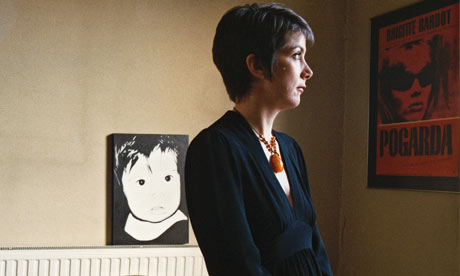
We do like our certainty don't we!  A number of different things have all reminded me of this recently, there was the article about Charlotte Raven diagnosed with Huntingdon's Chorea, who considered suicide because of the loss of control implied; there was the "barmy vicar" story about advising the hard up to shop lift, which for me became a story because people wanted a rule, not to look at a situation; and a friend blogged on the desire for certainty and control being behind the concerns about the Haiti earthquake.

In the west we have reached a situation when the illusion of being in control is sustainable.  We are no more in control than we ever were, but we think that we are.  And yet faith tells us that we are not - there is nothing that I can do to earn God's love, but it is there waiting to be enjoyed.  We are not very good at enjoying either, being too busy "controlling" things to have time to enjoy them.

And yet I know that when I can let go (interesting choice of phrase) I am freer.

(I don't claim to be any better than anyone else, as readers of other posts in this blog will know!).

Sunday, 17 January 2010

Does the "Great Man" theory of history work?


In a recent Church Times Simon Parke wrote about salary differentials.  The day I read it I had been talking at lunch with some friends about how university rankings are different, now my children are applying, from when I applied.  Then Paul Vallely wrote about "Great Men" (sic) (may not be available free until later).  This set me wondering what difference good leadership makes.  Why is it that some universities have got better and others have got worse (or have they?  Is it just that some have got better?).  The same of course applies to all institutions - how much difference can the person at the top make?  Certainly the press seem to think that the "right" person makes a difference - stories of strong leaders appointed to turn around failing "whatevers" abound.  And I suspect most of us will recognise the reverse, stories of companies, churches, schools where the appointment of a new leader has lead to a rapid decline in performance.

In my time in industry I worked for the same company for about 20 years (not the same PLC, the same Ltd) and during that time saw fluctuations in our performance - received wisdom was that the industry was cyclic.  Significant capital investment was required in a market where sales had been gently declining for years.  The simple explanation was that when times were good external entrants saw a good return and entered the market - however more capacity meant a reduction in prices (simple economics), until the pain became too great and somebody removed capacity from the market, boosting profitability again.  For many years we assumed that we were prey to external forces, until latterly one of our leaders started looking for ways to manipulate the supply in the industry.  I think the jury is out on whether it succeeded in the long term - but it is an example of someone changing perception.

The alternative view however, is expressed by David Taylor and Peter Rollins.  In "The Fidelity of Betrayal" (reviewed here) Peter Rollins discusses the idea that the role of a leader is to refuse to lead!  That there is a need for a leader, because without one someone would step in and lead, but that their role is to not lead.

Similarly in the "Naked Leader" David Taylor encourages leaders to give power away.  To the extent that he suggests leaders should always give the credit to their staff and take the blame on themselves.

Of course the two ideas are not in conflict!  After all, the idea of managing supply need not have come from the person at the top, the management slogan "free brain with every pair of hands" has been around for ages, and refusing to lead encourages others to take responsibility themselves rather than waiting to be told what to do.

So where does that leave the idea of the "Great Man"?  Perhaps the answer is that one person can make a difference, but not by being a "Great Man", but by releasing the power and creativity in others.  Perhaps the reason that things can so quickly go wrong is because the desire for control (referred to in yesterdays post about euthanasia) restricts the ability of everyone to contribute.

Saturday, 16 January 2010

Euthanasia - What do you think?

I stumbled across this article in the Guardian and it reminded me of the time I read one of Shelia Cassidy's books -I can't be sure, but I think it was either "Sharing the Darkness: The Spirituality of Caring" (reviewed here) or "Light from the Dark Valley: Reflections on Suffering and the Care of the Dying".  One of these was a book which changed my view on euthanasia from being for it to being against it - though I have to admit that I have forgotten why!  Here is an interview, which perhaps helps to explain.

That said what struck me in this article was the idea that the reason that people want euthanasia for themselves is that they cannot bear to lose control - or perhaps more accurately, in my view, acknowledge that they never had any control!

If you are interested in hearing Sheila Cassidy, she will be speaking at St Michael and All Angels, Amersham on the Hill on 16th September 2010, more details here.

LinkWithin

Related Posts with Thumbnails