22 hours a week on sermon writing? That is how long "effective" leaders spend in this survey (h/t Paul Walker) compared to 4 hours for the comparison leaders. A commenter on Paul's blog has already questioned the definition of "effective", however I want to look at this a bit more.
One of the questions that I want to know the answer to is how often they preach, and for how long. For example how long would Rob Bell put down for sermon prep? I wonder how long he spends making each of his videos?
4 hours for the others is also interesting. When I was on a placement I was told by the vicar that their training incumbent taught them to spend an hour of writing for every minute of the sermon - so an 8 minute sermon would take 8 hours. Somewhere on the web I found a vicar who blogged that he felt that he should spend at least one session, about 4 hours, on sermon prep. I don't preach every week - so my average would be lower still.
It also struck me that in a bigger church there would be more people to do the other things - so if there weren't other things that I had to do would I spend 22 hours writing a sermon? Well, perhaps it depends on what "writing" entails. Reading more widely, watching more films for illustrations, talking to people more about it - perhaps I would do these things, but then I do them now and don't call them sermon preparation!
Oh - and if the effective leaders are so good at making time how come they sleep 14 hours a week less?
Traveller in search of God looking for fellow travellers. Currently Priest in Charge, Hale with Badshot Lea Team Ministry, formerly an IS Manager in a large UK based food company.
Showing posts with label Leadership. Show all posts
Thursday, 15 April 2010
Monday, 22 March 2010
Models of Church - which one for me?
What size of church do I want to work in? Or more particularly, what model of church? I am reaching the point in my ministry when it is time to move on, and at present I have been thinking about what I am called to.
A couple of weeks ago the Diocese sent all the 3rd year curates on a course from 3D Coaching teaching us how to fill in CVs and be interviewed, but also helping us figure out what it was that we felt called to (keep nearly writing "what we want to do next" J).
When I got back I remembered "Ministry in 3 Dimensions" and the different models of church in the appendix, and on Googling found this which goes into the ideas in a little more detail. An article in the Guardian saying that you cannot have more than150 friends also caught my attention as it dovetails nicely with the first article.
I first read this book several years ago, but on rereading it realised that I was drawn to the Pastoral Church. I wondered whether I might be being called to a Program Church (though leaping straight to such a large church is probably a tad ambitious) as I believe that I have the skills that are required, but I know that I would also want to know the people - and the article warns against trying to do both. In my previous job I knew everyone in our Head Office (about 100) and one of my concerns in my previous curacy was how difficult it was to get to know the congregations.
On the course we were told the story of someone who was in a Program Church but who realised that they wanted to be in a Pastoral one and surprised people by moving to a smaller church. We were shown a model in the form of a Venn Diagram (fun examples can be found here) which looked at our capabilities, the needs of the job and our passion and I realised the importance of having some passion in the job rather than just doing something which was needed and which I could do. So now I have a better idea of what I am looking for Church Times here I come!
A couple of weeks ago the Diocese sent all the 3rd year curates on a course from 3D Coaching teaching us how to fill in CVs and be interviewed, but also helping us figure out what it was that we felt called to (keep nearly writing "what we want to do next" J).
When I got back I remembered "Ministry in 3 Dimensions" and the different models of church in the appendix, and on Googling found this which goes into the ideas in a little more detail. An article in the Guardian saying that you cannot have more than150 friends also caught my attention as it dovetails nicely with the first article.
I first read this book several years ago, but on rereading it realised that I was drawn to the Pastoral Church. I wondered whether I might be being called to a Program Church (though leaping straight to such a large church is probably a tad ambitious) as I believe that I have the skills that are required, but I know that I would also want to know the people - and the article warns against trying to do both. In my previous job I knew everyone in our Head Office (about 100) and one of my concerns in my previous curacy was how difficult it was to get to know the congregations.
On the course we were told the story of someone who was in a Program Church but who realised that they wanted to be in a Pastoral one and surprised people by moving to a smaller church. We were shown a model in the form of a Venn Diagram (fun examples can be found here) which looked at our capabilities, the needs of the job and our passion and I realised the importance of having some passion in the job rather than just doing something which was needed and which I could do. So now I have a better idea of what I am looking for Church Times here I come!
Wednesday, 27 January 2010
Undefendedness
Simon Walker is currently writing a new book, and is blogging about it here. Regular readers (?) of this blog will know that I am a fan of his books on leadership and have blogged directly or indirectly on them here and here. I think this is a good example of undefendedness. He originally set up his blog elsewhere, but within 24 hours of receiving feedback that people would like things like an RSS feed he moved it to deliver!
The new blog contains some great material already, and as I write there are only three entries!
There is one on whether having been converted we should now spend our energy serving (here). My initial reaction to it is that the idea didn't particularly ring true for me personally (or perhaps it does - though I am trying to change it), and I wonder whether it is a case of faith development. Most people who have heard of faith development know of the Fowler model, but there is also the Hagberg/Guelich model which suggests that the serving comes before having a crisis of faith, which then leads to a deeper faith. I have also heard it suggested that some churches keep people from having that crisis to keep them productive, although if I am charitable it would be to keep them from the crisis - but for me the crisis is a fundamental part of Christian growth.
There is also a super post on stillness.
Monday, 25 January 2010
Personality Type and Blogging
I was discussing blogging with a friend, and it was suggested to me that my blog is different from my radio show (sounds impressive - just a one off 1 hour show on Radio Africa, an RSL radio station, this year - it can still be heard here if you want to see for yourself - Reverend Alan - third one on the list).
We got into a discussion about whether this was about personality types. In Myers Briggs terms I am an ENFJ (for what that is worth, over the past 10 years I have been an INTP, INFP, ENFP as well! There is then a debate about whether your MBTI stays the same over time or whether it can change - from personal experience I lean to the fact that it stays the same - but our perception of it can change. As I stripped away the masks that I had built I discovered who I had always been). If you scroll to the bottom of this page you will see the following:
The other approach we took was to think about whether it somehow corresponded with Simon Walkers description of Front Stage and Back stage, although as this is more about what we do and don't display that perhaps doesn't work.
The question this leaves me with is whether other bloggers find that they are unintentionally different on their blog and in other activities (which I am not trying to be - or even trying not to be!).
We got into a discussion about whether this was about personality types. In Myers Briggs terms I am an ENFJ (for what that is worth, over the past 10 years I have been an INTP, INFP, ENFP as well! There is then a debate about whether your MBTI stays the same over time or whether it can change - from personal experience I lean to the fact that it stays the same - but our perception of it can change. As I stripped away the masks that I had built I discovered who I had always been). If you scroll to the bottom of this page you will see the following:
What we wondered was whether blogging is an Introverted activity, and hence my Intuition and Thinking come into play, whereas radio is an Extraverted activity and hence the Feeling and Sensing come out more. This is certainly not a scientific theory, more a feeling (so that self destructs then - blogging as a Feeling activity J).Dominant: Extraverted FeelingAuxiliary: Introverted IntuitionTertiary: Extraverted SensingInferior: Introverted Thinking
The other approach we took was to think about whether it somehow corresponded with Simon Walkers description of Front Stage and Back stage, although as this is more about what we do and don't display that perhaps doesn't work.
The question this leaves me with is whether other bloggers find that they are unintentionally different on their blog and in other activities (which I am not trying to be - or even trying not to be!).
Sunday, 17 January 2010
Does the "Great Man" theory of history work?
In a recent Church Times Simon Parke wrote about salary differentials. The day I read it I had been talking at lunch with some friends about how university rankings are different, now my children are applying, from when I applied. Then Paul Vallely wrote about "Great Men" (sic) (may not be available free until later). This set me wondering what difference good leadership makes. Why is it that some universities have got better and others have got worse (or have they? Is it just that some have got better?). The same of course applies to all institutions - how much difference can the person at the top make? Certainly the press seem to think that the "right" person makes a difference - stories of strong leaders appointed to turn around failing "whatevers" abound. And I suspect most of us will recognise the reverse, stories of companies, churches, schools where the appointment of a new leader has lead to a rapid decline in performance.
In my time in industry I worked for the same company for about 20 years (not the same PLC, the same Ltd) and during that time saw fluctuations in our performance - received wisdom was that the industry was cyclic. Significant capital investment was required in a market where sales had been gently declining for years. The simple explanation was that when times were good external entrants saw a good return and entered the market - however more capacity meant a reduction in prices (simple economics), until the pain became too great and somebody removed capacity from the market, boosting profitability again. For many years we assumed that we were prey to external forces, until latterly one of our leaders started looking for ways to manipulate the supply in the industry. I think the jury is out on whether it succeeded in the long term - but it is an example of someone changing perception.
The alternative view however, is expressed by David Taylor and Peter Rollins. In "The Fidelity of Betrayal" (reviewed here) Peter Rollins discusses the idea that the role of a leader is to refuse to lead! That there is a need for a leader, because without one someone would step in and lead, but that their role is to not lead.
Similarly in the "Naked Leader" David Taylor encourages leaders to give power away. To the extent that he suggests leaders should always give the credit to their staff and take the blame on themselves.
Of course the two ideas are not in conflict! After all, the idea of managing supply need not have come from the person at the top, the management slogan "free brain with every pair of hands" has been around for ages, and refusing to lead encourages others to take responsibility themselves rather than waiting to be told what to do.
So where does that leave the idea of the "Great Man"? Perhaps the answer is that one person can make a difference, but not by being a "Great Man", but by releasing the power and creativity in others. Perhaps the reason that things can so quickly go wrong is because the desire for control (referred to in yesterdays post about euthanasia) restricts the ability of everyone to contribute.
Friday, 8 January 2010
What have these people got in common?
People I admire - Read on!
Following on from my post on what education is for, and a number of blogs I read on priesthood (which I can't now find!) I started mulling over what being a priest is about. Right now my working definition is to become the kind of person that I described in my education post, and to help and
encourage others to do the same. This might seem a long way from the Gospel, but I believe that that is what Jesus was doing (as a long aside I was interested to read that the originator of WWJD was using it to stimulate social action, and the book which told me that suggests that it should only be used for yourself - not others - see left).
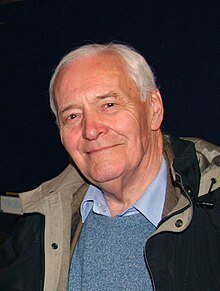
This then set me thinking about the "Undefended Leader" (also for sale from here) a book that was highly recommended during some training. This in turn set me thinking about politicians I have admired, not necessarily for their politics, but for their approach. Interestingly they are all from the extremes: Enoch Powell, Michael Foot, and Tony Benn. I think that what I admired about all of them is that they were prepared to speak their mind - regardless of who it upset. They also showed some ability to change their mind, with at least two of them showing changes in political views over the life. This ability to speak your mind seems to be something that today's politicians have lost, and I suspect that this prevents those who would speak their mind from entering politics - a great shame to my mind.
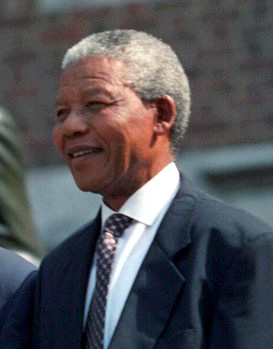
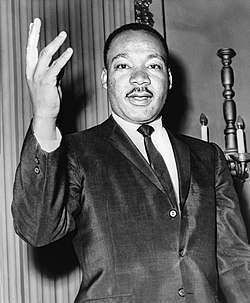
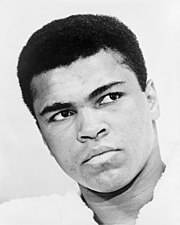
This is also a quality that I think is shown by some of the other people I admire: Nelson Mandela, Gandhi, Martin Luther King and Muhammad Ali, all of whom stood for what they believed and suffered in one way or another.
As I was mulling all this over I read todays excerpt from "Insights for the Ages" (it changes daily, so won't be there later): "Adulthood is a matter of being completely open to the insights that come to us from our superiors and our spouses, our children and our friends, so that we can become more than we can even begin to imagine for ourselves."
I can't remember where I found it, but there is a quote along the lines that if Jesus were us he would be the best us we could be - not someone else. I think that for all of us our calling is to be the best us we can be. And I can think of no higher calling that to do that and to try to help others to do the same.
Labels:
Benedict,
Faith,
Leadership,
Personal Development
Tuesday, 5 January 2010
Mistakes - Good or bad?
Have you ever worked in an environment where mistakes weren't tolerated? Despite Einstein's quote: "Anyone who has never made a mistake has never tried anything new" there are still places where mistakes are not welcome. This story from a web site I find patchy, but interesting enough to persevere with:
A sign in a high-pressure sales office brings a smile: 'Do you like to travel? Do you want to meet new friends? Do you want to free up your future? All this can be yours if you make one more mistake.'
If you click through to the full story it also talks about how mistakes can happen because people will not challenge their "betters" for any number of different reasons. In Malcolm Gladwell's book Outliers he tells of how Korean Airlines had more than their fair share of accidents because the culture was not to challenge a superior.
As I have started to come to terms with this, and accept that I will make mistakes, it has been a great release.
I'm right aren't I :)
Subscribe to:
Posts (Atom)